


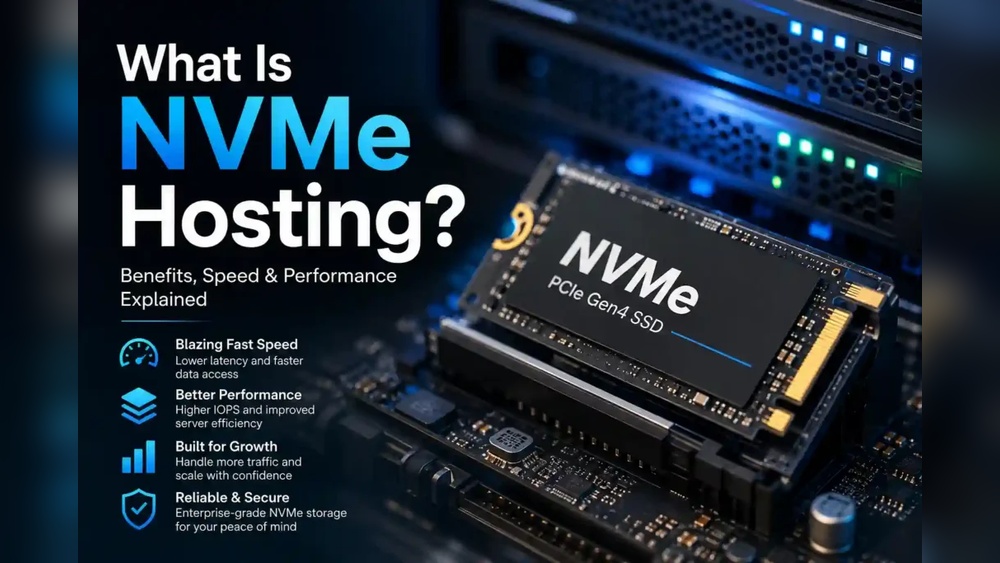
If you’re looking to speed up your website and improve your online presence, understanding NVMe hosting could be a game-changer for you. But what exactly is NVMe hosting, and why should it matter to your site’s performance?
In simple terms, NVMe hosting uses the latest storage technology to deliver lightning-fast data access, making your website load quicker and run smoother. Imagine your visitors never having to wait for pages to load or files to download—that’s the power of NVMe hosting.
Keep reading to discover how this cutting-edge technology works and why it might be the best choice for your hosting needs.

Credit: www.dazzlehosting.co.uk
Nvme Hosting Basics
NVMe hosting uses a new type of storage technology to keep websites fast. It stores data on NVMe solid-state drives (SSDs). These drives are much quicker than older hard drives or standard SSDs.
This speed helps websites load faster and handle more visitors. NVMe hosting is becoming popular for business and personal sites that need reliable performance.
What Nvme Means
NVMe stands for Non-Volatile Memory Express. It is a protocol designed to access high-speed storage media. Unlike traditional storage, NVMe communicates directly with the computer’s CPU.
This direct link reduces delays and improves data transfer rates. NVMe is built specifically for SSDs, which use flash memory to store data.
How Nvme Works
NVMe works by using a faster connection between storage and the computer. It uses multiple lanes on the PCIe interface to send data quickly. This allows many commands to be processed at once.
The result is lower latency and higher input/output operations per second (IOPS). Websites and applications run smoother with less waiting time. NVMe hosting delivers faster read and write speeds compared to older technologies.
Speed Advantages
Speed is a key reason many choose NVMe hosting. NVMe technology offers much faster data access than older storage types. This speed helps websites load quickly and handle more visitors without slowing down. Faster storage means better overall performance for your site.
Nvme Vs Sata Ssd
NVMe uses a newer technology than SATA SSDs. It connects directly to the motherboard through the PCIe interface. SATA SSDs use an older interface designed for slower drives.
Because of this, NVMe drives can read and write data much faster. They handle multiple commands at once, improving efficiency. SATA SSDs process fewer commands at a time, which slows down data transfer.
For hosting, NVMe means quicker file access and faster website loading. SATA SSDs are still fast but do not match NVMe’s speed. The difference is noticeable, especially for busy sites.
Nvme Vs Hdd Hosting
HDDs are traditional hard drives with spinning disks. They are much slower than any SSD, including SATA and NVMe.
NVMe drives have no moving parts and use flash memory. This allows them to access data instantly. HDDs take longer because the disk must spin to find data.
Choosing NVMe over HDD hosting greatly improves website speed. Pages load faster, and the server handles more visitors smoothly. HDD hosting can cause delays and slow responses.
Performance Benefits
NVMe hosting offers clear performance benefits for websites and applications. It uses advanced storage technology that improves speed and efficiency. This section explains how NVMe hosting enhances performance in key areas.
Faster Data Access
NVMe drives access data much quicker than traditional drives. They connect directly to the server’s CPU, reducing delays. This direct connection allows data retrieval in milliseconds. Fast data access means smoother handling of user requests.
Improved Server Response
With NVMe hosting, servers respond to requests faster. The technology reduces bottlenecks that slow down processing. Servers can manage more tasks at once without lag. This leads to better overall server efficiency and reliability.
Impact On Website Loading Times
Websites hosted on NVMe servers load noticeably faster. Quick data access speeds up the display of images, text, and videos. Faster loading keeps visitors engaged and reduces bounce rates. This speed boost improves user experience and SEO rankings.

Credit: cyfuture.cloud
Nvme Hosting Features
NVMe hosting offers a range of features that improve website performance and user experience. This type of hosting uses NVMe SSDs, which are much faster than traditional storage. The benefits include better speed, reliability, and security. These features matter for both small and large websites. Here is a closer look at some key NVMe hosting features.
Storage Reliability
NVMe SSDs provide high reliability for data storage. They have fewer moving parts than traditional hard drives. This reduces the risk of mechanical failure. NVMe drives also handle high workloads without slowing down. This keeps websites running smoothly at all times. Regular error correction ensures data stays accurate and intact. These qualities make NVMe hosting a dependable choice.
Scalability And Flexibility
NVMe hosting can easily scale to meet growing website demands. It supports fast data access even as traffic increases. Users can upgrade storage space without downtime. This flexibility suits businesses that expect to expand. NVMe technology also works well with cloud and hybrid hosting setups. It adapts quickly to changing needs without losing speed.
Data Security Considerations
NVMe hosting includes robust security features to protect data. Many providers use encryption to keep information safe. Regular backups help recover data if needed. Some NVMe setups offer additional layers like firewalls and malware scans. These measures reduce the risk of data breaches. Secure NVMe hosting supports compliance with data protection laws.
Choosing Nvme Hosting
Choosing NVMe hosting means picking a service that uses NVMe SSDs for storage. NVMe drives offer much faster data transfer than traditional SSDs. This speed boost improves website loading times and server response. It matters for sites with high traffic or those needing quick data access.
Before selecting NVMe hosting, consider who benefits the most, the costs involved, and typical scenarios where it excels. Understanding these points helps make a smarter choice for your hosting needs.
Who Should Use Nvme Hosting
Websites with heavy traffic gain from NVMe hosting’s speed. E-commerce stores need fast loading to keep shoppers happy. Developers running apps that demand quick data access also benefit. If your current hosting feels slow, NVMe might solve that.
Cost Factors
NVMe hosting usually costs more than standard SSD hosting. The price depends on storage size, bandwidth, and server features. Some providers offer tiered plans based on resources needed. Weigh the speed benefits against your budget to decide.
Common Use Cases
High-traffic blogs and news sites use NVMe hosting for fast updates. Online stores rely on it to handle many users at once. Gaming servers and streaming platforms also choose NVMe for lower latency. Any site needing quick read/write speeds fits well.
Technical Insights
Understanding the technical side of NVMe hosting helps clarify why it is faster and more efficient than traditional hosting. NVMe uses a modern protocol and connection method that improves data transfer speeds. This section breaks down the key technical elements behind NVMe hosting.
Nvme Protocol Explained
NVMe stands for Non-Volatile Memory Express. It is a communication protocol designed specifically for SSDs. It allows data to move quickly between the storage and the server’s CPU. NVMe reduces latency and increases input/output operations per second (IOPS). This means faster access to stored data and better performance for websites and applications.
Connection Types
NVMe drives connect through the PCIe (Peripheral Component Interconnect Express) interface. PCIe supports multiple lanes for data transfer, allowing high bandwidth. This connection is much faster than SATA, the older standard used by many SSDs. NVMe’s direct connection to the CPU reduces bottlenecks and speeds up data flow. This results in quicker loading times and improved server response.
Compatibility With Hosting Platforms
Most modern hosting platforms support NVMe SSDs. Cloud providers and dedicated server hosts often offer NVMe storage options. Web hosting control panels are updated to handle NVMe drives smoothly. Compatibility ensures users can benefit from faster storage without compatibility issues. It also allows easy integration with popular content management systems and software stacks.
Comparing Hosting Options
Choosing the right hosting option affects your website’s speed and performance. Various hosting types use different storage technologies and setups. Understanding these differences helps pick the best fit for your needs.
Nvme Vs Traditional Ssd Hosting
NVMe hosting uses faster storage drives than traditional SSD hosting. NVMe drives connect directly to the server’s PCIe lanes, offering quicker data transfer. Traditional SSDs rely on older SATA connections, which slow down speeds. Websites on NVMe hosting load faster and handle traffic better. Traditional SSDs still perform well but may lag under heavy use.
Nvme Vs Cloud Hosting
Cloud hosting spreads resources across many servers, offering flexibility and scalability. NVMe hosting focuses on speed with high-performance drives on a single server. Cloud hosting can be slower because data moves between multiple machines. NVMe hosting gives quicker access to stored data. Both have strengths based on website type and traffic.
Location And Speed Impact
Server location impacts website speed more than storage type alone. Hosting servers closer to users reduces data travel time. NVMe hosting near your audience boosts loading times significantly. Hosting far away, even with NVMe, may cause delays. Choose hosting near your target audience for best performance.
Future Of Nvme Hosting
The future of NVMe hosting looks promising and full of potential. NVMe technology offers fast data access and low latency. These features will drive new possibilities for web hosting.
As more websites demand speed and reliability, NVMe hosting will become the preferred choice. Hosting providers will continue to improve NVMe storage systems for better performance. This will benefit businesses and users alike.
Emerging Technologies
NVMe hosting will integrate with artificial intelligence and machine learning. These technologies need fast storage to process data quickly. NVMe storage will help deliver real-time results and smarter applications.
Cloud computing will also benefit from NVMe storage. It allows faster data transfer between servers and users. This will improve cloud services and support more complex tasks.
Trends In Web Hosting
Web hosting is moving towards ultra-fast, scalable solutions. NVMe hosting fits this trend by offering superior speed and efficiency. More hosts will adopt NVMe SSDs to meet growing demands.
Security will remain a priority as hosting evolves. NVMe drives support advanced encryption methods that protect data. Hosting providers will combine speed with strong security measures.
Green hosting is gaining attention too. NVMe drives use less power than traditional drives. This makes NVMe hosting more eco-friendly and sustainable for the future.

Credit: www.bluehost.com
How Our Company Can Help You with What Is Nvme Hosting?
Exploring Practical Learning Opportunities with NVMe Hosting
Understanding the technical insights behind NVMe hosting opens doors to hands-on learning that can deepen your grasp of web hosting performance. For instance, experimenting with different hosting options—comparing NVMe hosting against traditional SSD or HDD setups—can illustrate the real-world speed advantages and performance benefits discussed earlier. This approach helps you see how NVMe’s cutting-edge features translate into faster load times and improved reliability.
For beginners or developers eager to expand their knowledge, setting up a small website on an NVMe-based server can be an effective practical exercise. It not only reinforces the concepts of NVMe hosting basics but also highlights the importance of choosing the right hosting environment based on your specific needs.
- Test website responsiveness under various workloads
- Analyze how NVMe storage impacts data retrieval speeds
- Compare uptime and stability metrics with other hosting types
At HostingAdvise, we emphasize evidence-based guidance grounded in official documentation and verified user feedback, helping you make informed decisions. For additional learning resources or technical questions, reaching out to hosting experts or consulting detailed guides can provide valuable support.
Frequently Asked Questions
What Is Nvme And Do I Need It?
NVMe (Non-Volatile Memory Express) is a fast storage protocol for SSDs, boosting speed and performance. Choose NVMe for faster data access and improved system responsiveness.
What Are The 4 Types Of Hosting?
The four types of hosting are shared, VPS (Virtual Private Server), dedicated, and cloud hosting. Each offers different resources and control levels.
Is Nvme Good Or Bad?
NVMe offers extremely fast data transfer speeds, improving performance for SSDs. It enhances storage efficiency and responsiveness, making it good for most users.
How Much Does Nvme Cost?
NVMe SSDs typically cost between $0. 10 and $0. 30 per gigabyte, depending on capacity and speed. Prices vary by brand and retailer.
Conclusion
NVMe hosting offers faster data access and better performance. It uses advanced SSD technology to speed up your website. This means quicker loading times and smoother user experience. NVMe hosting suits websites needing high speed and reliability. Choosing NVMe hosting can improve your site’s overall efficiency.
It’s a smart option for modern web hosting needs.












Leave a comment