


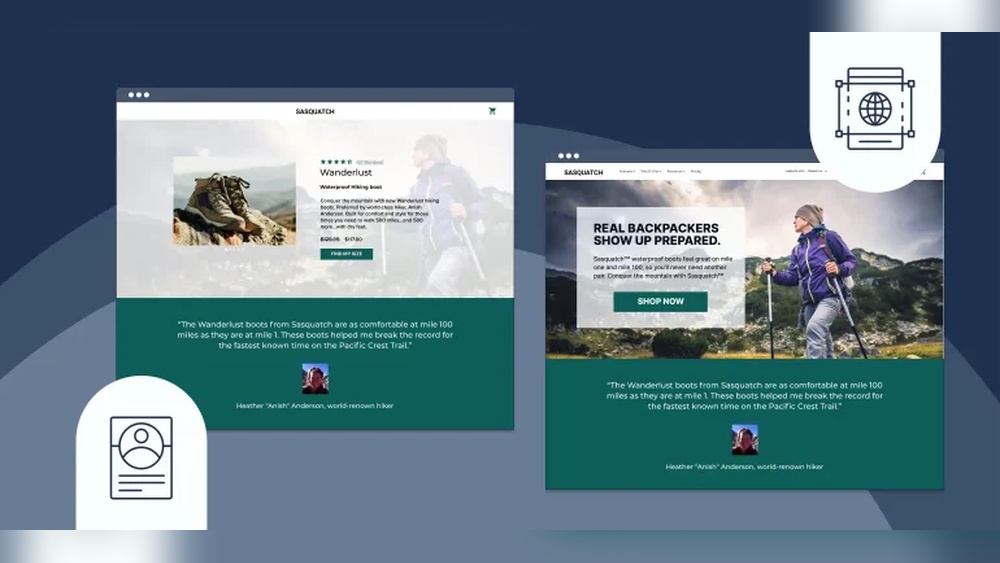

Are you wondering whether you need a landing page or a full website for your business? Choosing the right option can make a huge difference in how you connect with your audience and reach your goals.
Your landing page and website serve very different purposes, and knowing which one to use — or how to use both together — can boost your success dramatically. You’ll discover the key differences between a landing page and a website, why each matters, and how to decide what fits your needs best.


Keep reading to make the smartest choice for your online presence and get the results you want.
Purpose And Goals
Landing pages are built to encourage one clear action. They focus on converting visitors by guiding them toward a specific goal, such as signing up or buying a product. The design is simple and direct, removing distractions to keep users on track.
Websites act as information hubs. They provide many pages filled with details about a business, services, or products. Visitors can explore different topics, learn more, and find contact info. Websites support various functions like blogs, FAQs, and customer support.
| Aspect | Landing Page | Website |
|---|---|---|
| Primary Goal | Drive a single conversion action | Provide information and multiple options |
| Content | Focused, minimal, and direct | Broad, detailed, and varied |
| User Journey | Short and focused | Longer and exploratory |
Design And Layout
Landing pages focus on single-page simplicity. They have a clear, direct design to guide users toward one action. The layout is clean, with minimal distractions. This makes it easier for visitors to understand the message quickly and act.
In contrast, websites use a multi-page structure. They offer various pages like About, Services, and Contact. This allows sharing more detailed information. Navigation menus help users explore different sections easily. Websites provide a broader experience but can be more complex to navigate.
| Aspect | Landing Page | Website |
|---|---|---|
| Number of Pages | Single page | Multiple pages |
| Purpose | One specific goal | Multiple goals and info |
| Design | Simple and focused | Detailed and varied |
| Navigation | Minimal or none | Menus and links |
Navigation Differences
Landing pages have very simple navigation. They usually show only a few links or buttons. This helps visitors focus on one goal, like signing up or buying.
Websites offer full menus with many options. Visitors can explore different pages like About, Services, Contact, and more. This gives a complete view of the business or topic.
Landing pages keep users on track by limiting choices. Websites give freedom to browse and find detailed info. This difference affects how visitors move through the site and what they do next.

Credit: instapage.com
Traffic And User Journey
Landing pages attract targeted traffic. Visitors come with one goal. They often arrive from ads, emails, or social media posts. This traffic is focused on a specific offer or action. It makes the user journey simple and direct. Visitors see only what matters most. This helps increase conversion rates and reduces distractions.
Websites get broad traffic from many sources. People find websites through search engines, direct visits, or links from other sites. The traffic includes users with different needs and interests. Websites offer many pages with varied content. Users explore, learn, and browse at their own pace. This creates a longer and more complex user journey.
Content And Messaging
Landing pages have a very focused message. They aim to get visitors to do one thing. This could be signing up, buying, or downloading. The content is short and clear. It removes distractions to keep people on task.
Websites offer more diverse content. They include many pages with different topics. Visitors can explore services, blogs, about us, and more. This helps build a full picture of a business or brand.
| Landing Pages | Websites |
|---|---|
| One clear goal | Many goals and topics |
| Simple, direct content | Detailed and varied content |
| Designed for quick action | Designed for browsing and learning |

Credit: www.youtube.com
Use Cases And Examples
Landing pages focus on one goal, like collecting emails or selling a product. They are simple and direct. Users see only what matters most. This makes it easier to get them to act fast.
Websites contain many pages. They share lots of information about a business or service. Visitors can explore different topics and learn more. Websites build trust and show a brand’s full story.
Use a landing page for short campaigns or ads. Use a website if you want to give detailed info and multiple choices. Sometimes, combining both works best. Send visitors from ads to landing pages, then link to the full website for more details.
Benefits And Drawbacks
Landing pages focus on one goal, like getting visitors to sign up or buy. They are simple, with few distractions, helping people act fast. This can boost conversion rates. They load quickly and are easy to track.
Websites show lots of information about a business or person. They have many pages, like About, Services, and Contact. This helps visitors learn more and build trust. Websites can support long-term growth and brand building.
| Advantages | Landing Pages | Websites |
|---|---|---|
| Focus | One clear goal | Multiple purposes |
| Speed | Loads fast | Can be slower |
| Content | Simple and short | Detailed and varied |
| Tracking | Easy to measure | Harder to track specific actions |
Both have common limitations. Landing pages may feel too simple and not build trust well. Websites can be costly and confusing for visitors. Careful planning helps pick the right tool.
Optimization Strategies
Improving landing page conversions involves clear, focused content. Use a strong call-to-action (CTA) to guide visitors. Keep forms simple to increase sign-ups. Fast loading speeds reduce bounce rates. Use trust signals like reviews or badges to boost confidence. Test different designs to find what works best. Remove distractions to keep visitors focused on the goal.
Enhancing website user experience requires easy navigation with clear menus. Use consistent colors and fonts for a neat look. Make sure the site works well on phones and tablets. Fast load times keep users happy. Provide helpful content that answers common questions. Use images and videos to make pages interesting. Regularly update the site to keep information fresh and relevant.
Technical Considerations
Landing pages load faster because they have fewer elements. Websites have many pages, so they may load slower. Speed affects user experience and bounce rates.
Search engines prefer sites that load quickly. A fast landing page can improve SEO ranking for specific keywords. Websites need ongoing SEO work to maintain rankings across many pages.
| Aspect | Landing Page | Website |
|---|---|---|
| Speed & Performance | Fast loading, simple design | Slower loading, complex structure |
| SEO Implications | Focused on one goal or keyword | Requires broad SEO effort |
| Cost & Maintenance | Lower cost, easy updates | Higher cost, needs regular updates |
Landing pages cost less to build and maintain. Websites require more time and money. Keeping content fresh on a website is important for SEO and visitors.
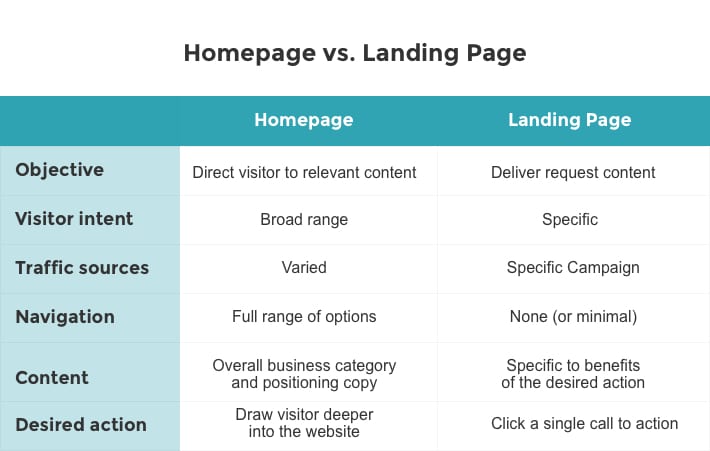
Credit: www.orbitmedia.com
How Our Company Can Help You with Landing Page Vs Website
Practical Learning: Applying Landing Page and Website Insights
Understanding the distinctions between landing pages and full websites opens up valuable learning opportunities, especially when considering design and layout as well as optimization strategies. For instance, experimenting with different navigation structures can help clarify how user journeys differ—landing pages often guide visitors toward a single goal, whereas websites provide broader exploration.
By analyzing content and messaging on both platforms, you can practice crafting concise, targeted copy for landing pages alongside more comprehensive storytelling for websites. This hands-on approach reinforces concepts like traffic sources and technical considerations, such as loading speed and mobile responsiveness, which HostingAdvise emphasizes as critical factors.
- Test how varying calls-to-action affect conversion rates on landing pages.
- Explore how multi-page websites support brand storytelling and SEO.
- Evaluate how different hosting solutions impact site performance.
If you’re curious about hosting options that support these experiments or need guidance on best practices, reaching out to knowledgeable communities or forums can be a helpful next step.
Frequently Asked Questions
Do I Need A Website If I Have A Landing Page?
A landing page targets a specific action, while a website offers broader information and multiple pages. Both can complement each other.
Are Landing Page And Website The Same?
A landing page is a single page focused on one goal, like capturing leads. A website has multiple pages offering broader information and interaction.
Is It Better To Have A Landing Page Or Website?
Choosing between a landing page or a website depends on your goals. Use a landing page for focused campaigns and conversions. Opt for a website to provide detailed information and showcase multiple offerings. Both can work together to enhance marketing and user experience effectively.
Can A Landing Page Be Part Of A Website?
Yes, a landing page can be part of a website. It focuses on a specific goal within the broader site structure.
Conclusion
Choosing between a landing page and a website depends on your goals. A landing page targets one clear action, like capturing leads or selling a product. A website offers more information and multiple pages for broader needs. Many businesses use both to support different parts of their marketing.
Understanding their strengths helps you create a better online presence. Focus on what your audience needs most. Simple, clear, and purposeful design works best.












Leave a comment